
How to Deal With Ice and Snow Buildup on Landscape Plants
Winter storms in the Lake Norman area often bring a mix of snow, ice, and rapid freeze–thaw cycles. While it’s natural to want to “fix” plants weighed down by winter weather, the wrong response can cause more damage than the storm itself. Knowing when to act—and when to leave plants alone—makes all the difference.
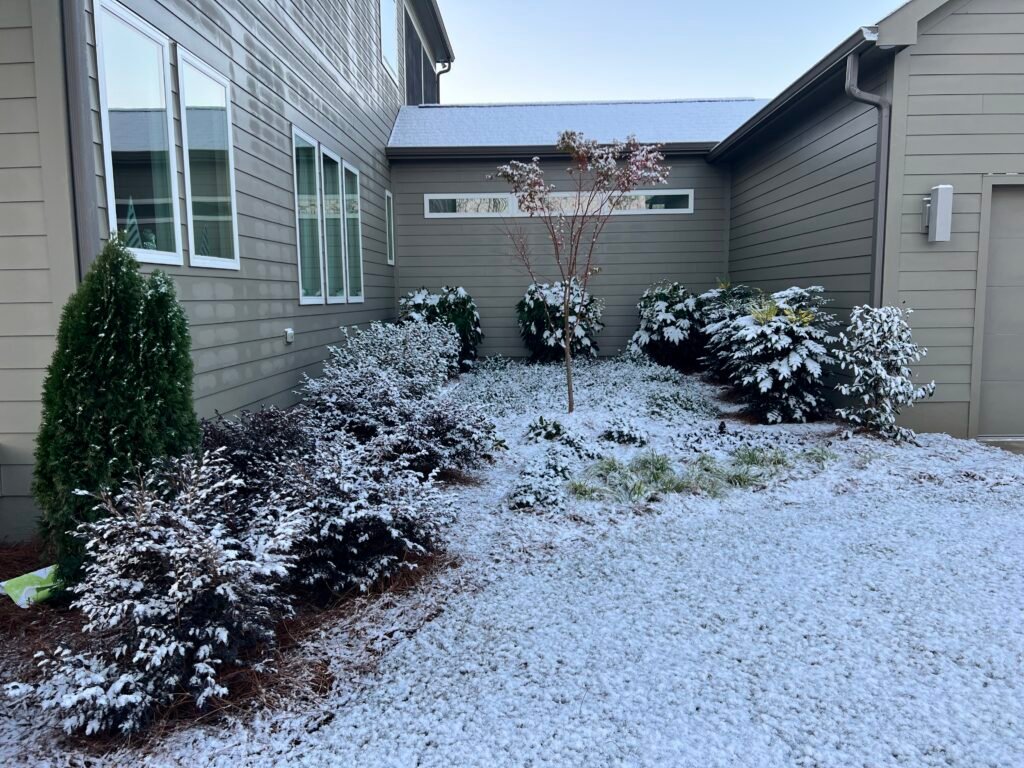
Snow and ice affect plants differently. Dry, fluffy snow is usually harmless and can even provide insulation. The real concern is heavy, wet snow, which can bend or splay shrubs. In those cases, gently brushing snow off with a broom, working from the bottom upward, is usually enough. Shaking plants or knocking snow loose from above can snap branches, especially when temperatures are near freezing.
Ice is a different story. Ice bonds branches together and makes wood extremely brittle. Trying to remove ice almost always results in broken limbs. The best approach is patience. Let ice melt naturally. Sunlight and rising temperatures will release branches far more safely than any manual effort.
Some plants are simply more prone to winter stress, particularly upright and narrow evergreens like boxwood, arborvitae, hollies, and yews. These plants often look badly damaged after snow or ice, but appearances can be misleading. In many cases, branches gradually return to their position as temperatures moderate.
Perennials and ornamental grasses may look flattened or lifeless after winter weather, but most recover on their own. Snow cover actually helps protect plant crowns from temperature swings. Avoid cutting back or uncovering frozen plants—wait until late winter or early spring to assess true damage.
Be cautious with de-icing salts near planting beds. Salt runoff from driveways and sidewalks can injure roots and buds. Shovel first, use salt sparingly, and avoid piling treated snow onto landscaped areas.
Most winter storm damage looks worse than it is. Gentle snow removal when appropriate, patience during ice events, and proper pruning once temperatures warm will keep landscapes healthy and set them up for strong spring growth.
Love receiving these. Thank you.